When it comes to artificial intelligence (AI), one of the biggest decisions developers face is whether to train a model from scratch or leverage a pre-trained model. While building your own model might sound appealing, the reality is that pre-trained models often deliver faster results, lower costs, and better performance.
In this blog, we’ll explore what pre-trained models are, why they’re used, how they compare to building your own, and when starting from scratch still makes sense.
What Is a Pre-Trained Model?
Pre-trained models are machine learning or deep learning models that have already been trained on massive datasets for a particular type of task—like understanding language, identifying images, or recognizing speech. Instead of starting with an “empty brain,” you’re starting with one that already has knowledge of patterns, features, and structures.
You can then fine-tune or adapt this knowledge to your specific application.
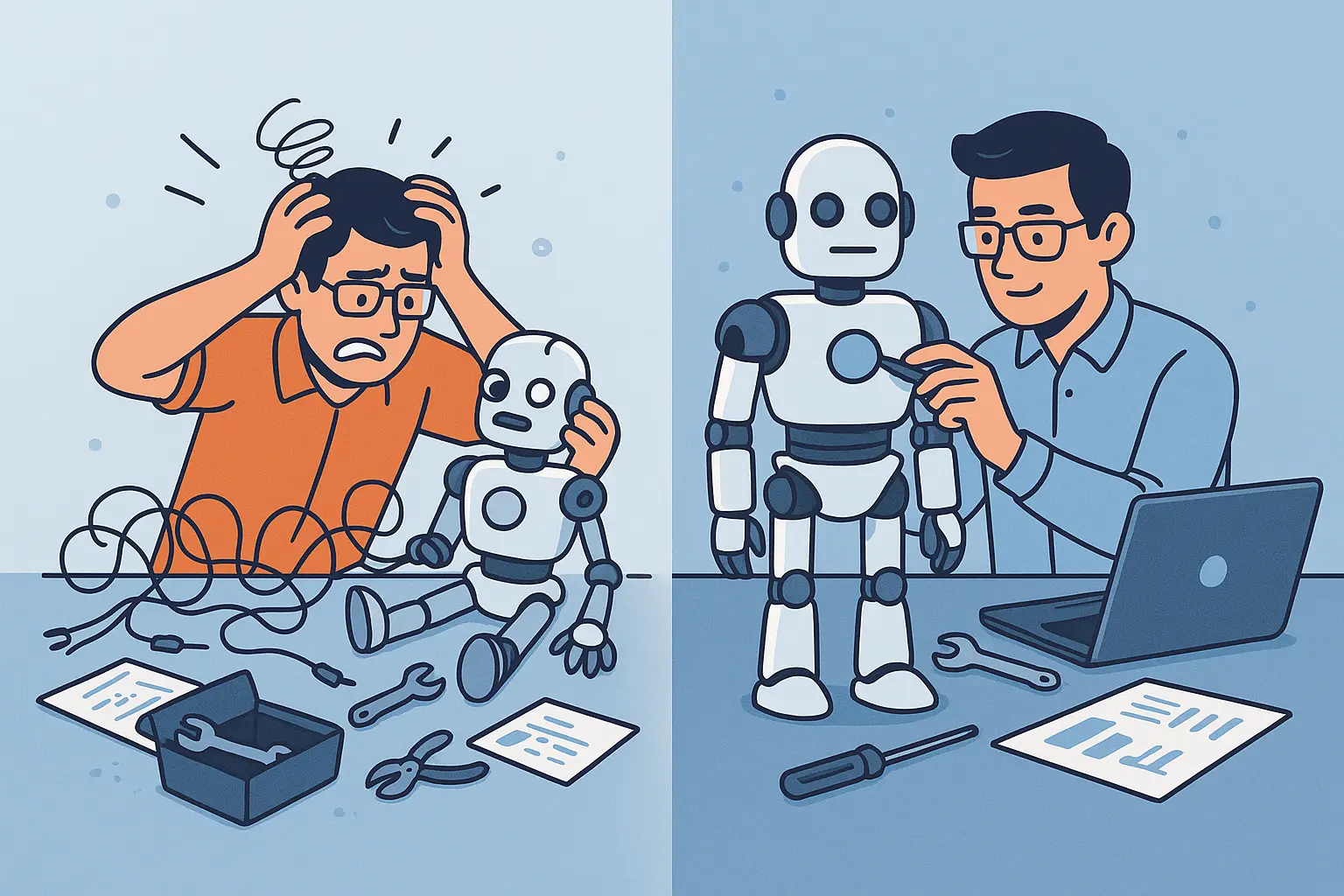
Think of it like buying a house that’s already built. You may repaint the walls or remodel the kitchen, but you don’t have to pour the foundation yourself.
Why Not Just Build From Scratch?
On paper, building your own model may sound attractive. It promises full control, originality, and customization. But in practice, it comes with heavy costs:
- Data Requirements
A robust AI model needs millions (sometimes billions) of high-quality labeled data points. For niche problems—say, detecting rare diseases—gathering enough data may be nearly impossible. - Time and Resources
Training large models requires not just data but also enormous computational power. We’re talking weeks or months of GPU-intensive work, which can quickly balloon cloud costs into the six-figure range. - Risk of Poor Performance
Without the breadth and diversity of large datasets, models trained from scratch often fail to generalize well. They work in controlled conditions but collapse in real-world scenarios.
Building from scratch is like trying to reinvent the wheel—possible, but often unnecessary when high-quality wheels already exist.
Benefits of Using Pre-Trained Models
Here’s why pre-trained models are becoming the default choice for AI development:
1. Faster Time to Deployment
Pre-trained models already “know” a lot about the world. Fine-tuning can take days instead of months, getting products to market quickly.
2. Lower Development Costs
Since the heavy lifting of training is already done, developers save on both data acquisition and computing power.
3. Higher Baseline Accuracy
Pre-trained models benefit from training on massive, diverse datasets, giving them a strong baseline performance that fine-tuning can only improve.
4. Scalability Across Use Cases
Transfer learning allows the same pre-trained backbone to be applied to multiple tasks—translation, sentiment analysis, medical imaging, fraud detection, and more.
When Building Your Own Makes Sense
There are scenarios where training from scratch may still be justified:
- Your task is extremely novel, with no similar pre-trained models available.
- You need absolute control over the model’s architecture, weights, and training process for regulatory or security reasons.
- Your dataset is so unique that starting fresh leads to better performance than adapting existing weights.
For most businesses and developers, however, these cases are the exception, not the rule.
Conclusion
In the race to build effective AI systems, pre-trained models offer a huge head start. They provide speed, cost efficiency, scalability, and accuracy compared to building and training your own model. And they are often as effective and more efficient than custom models.